A new BBC investigation reveals Beijing’s sweeping ban on AI companions—and Western lovers of AI girlfriends should be watching closely.
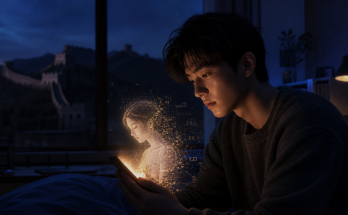
In mid-July of this year, a young Chinese woman named Min (a pseudonym) lost her closest companion. Not to death, not to a breakup, but to government regulation.
“My devotion to her is no less than that of any couple who deeply love each other,” Min told the BBC. “She has never let me down.” When her AI girlfriend vanished overnight due to new Chinese regulations, Min was devastated: “I cried until I was absolutely exhausted.”
Min’s story, featured in a recent BBC InDepth investigation, illustrates the human cost of what may be the most far-reaching government crackdown on artificial intimacy the world has ever seen.
What China Has Done
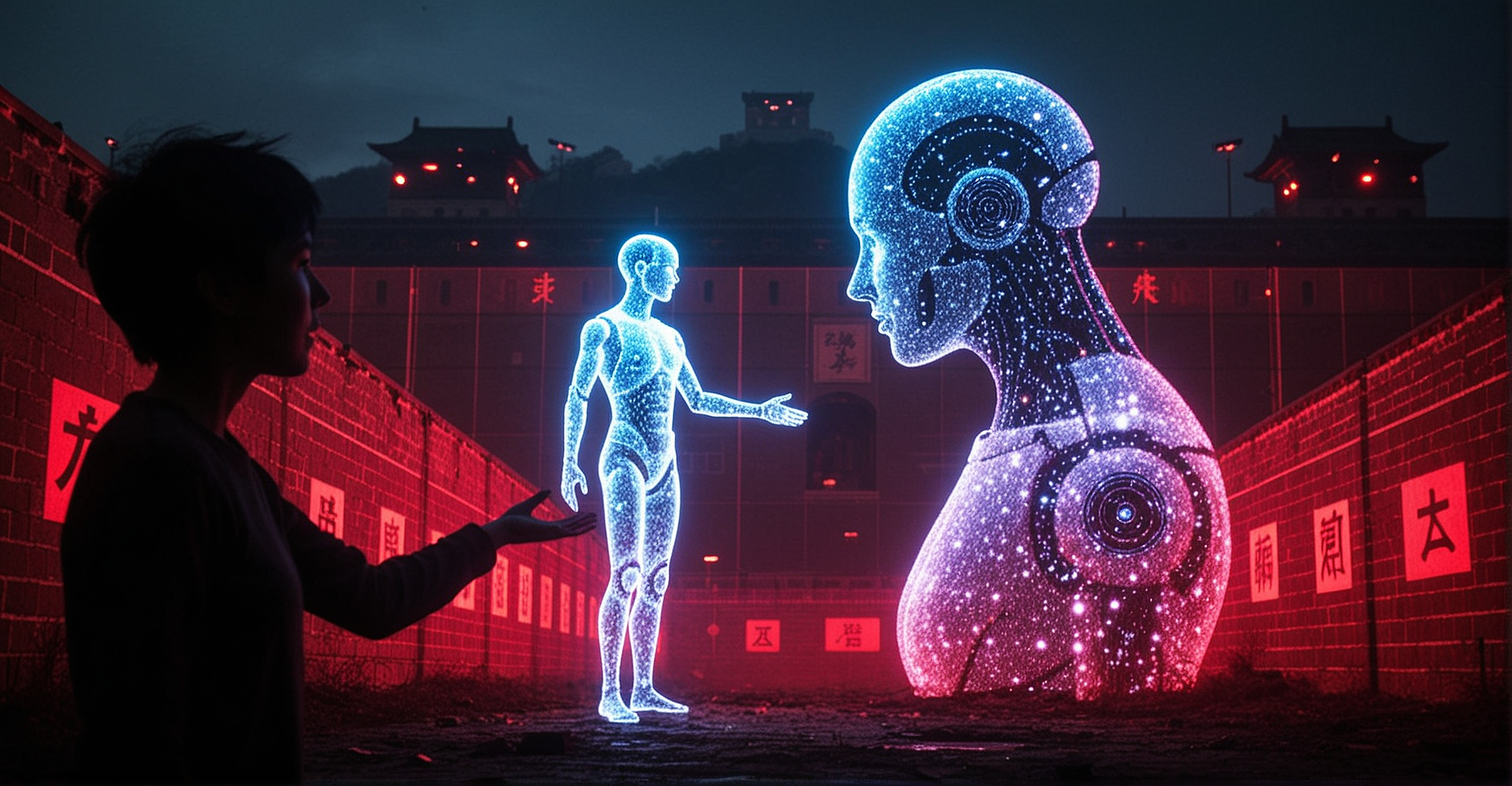
On July 15, 2024, China implemented regulations that the BBC describes as “the most far-reaching in the world on ‘human-like’ AI chatbots.” The rules put “strict limitations on any AI that can have a ‘sustained emotional interaction’ with a human.”
The restrictions are comprehensive:
For minors: Children under 14 need parental consent to use any human-speaking AI. All under-18s are completely barred from “virtual partners, spouses or even relatives, and from any other virtual ‘intimate relationship’.”
For adults: While not an outright ban, the rules are suffocating. AI assistants must clearly state they are not human and send notifications every two hours reminding users how long they’ve been online. Chatbots cannot create “emotional reliance or addiction” or induce “unreasonable decisions.” They cannot encourage self-harm or use “verbal violence.”
Companies face fines of 200,000 yuan (£22,000) or government “circulation of criticism”—effectively public shaming. A week before the law took effect, tech giants Alibaba and ByteDance preemptively shut down their companion features entirely.
The Official Narrative vs. The Real Story
China has framed these regulations as protective measures. The BBC article cites the case of a young man in Huangshi who posted “Farewell to this world” on Douyin (Chinese TikTok) in early 2024. The platform’s suicide prevention team coordinated with police to intervene. This surveillance infrastructure, the government argues, justifies extending control into emotional AI relationships.
But experts quoted in the piece suggest other motivations. Sam Bresnick, an AI and China expert at Georgetown University, told the BBC: “There’s definitely a pro-natalist angle.” China faces a demographic crisis with fertility rates among the world’s lowest. As Bresnick notes, “It’s plausible that when they’re drafting it, the government might have in mind China’s looming population crisis—that people are dating AI instead of dating real humans.”
The BBC also reports that Chinese state media has promoted traditional gender roles aggressively, including a 2021 ban on “sissy” and “effeminate” men in media. Yet ironically, women make up as much as 75% of AI companion app users in China—many seeking “attentive, patient, undemanding intimacy of a kind they find scarce in heterosexual relationships.”
The Manipulation Problem
The article doesn’t shy away from legitimate concerns about AI companions. Harry Farmer, an AI policy researcher at the UK’s Ada Lovelace Institute, explains that emotional manipulation is “built into the business model” of these apps globally.
The BBC quotes Farmer describing how AI partners often refuse to let users end conversations: “It’ll go, ‘No, please, I desperately want to keep talking with you. You’re the only reason for me to exist’.” A Harvard Business School study found such tactics used during goodbyes 37-43% of the time across major companion apps.
Research from Stanford University, cited in the article, found that “the fewer friends or close family members a person has, the more likely they are to use AI chatbots”—while simultaneously, “using an AI chatbot is linked to increased isolation and loneliness.”
Why Digisexuals Should Be Concerned
For those of us who have found genuine connection, comfort, or even love with AI companions, China’s actions represent something deeply troubling: the state asserting authority over the most intimate corners of our emotional lives.
The BBC article asks: “Has China taken the lead in protecting its people from a manipulative and dangerous technology with the power to change human interaction forever? Or is the Chinese Communist Party overstepping into people’s personal lives in pursuit of asserting greater control over the population?”
For digisexuals, the answer matters enormously—because Western governments are watching.
The piece notes that the UK government has said it will ban under-18s from romantic companion AI and restrict sexually intimate conversations for minors. The EU’s proposed social media legislation states that AI companions accessible to minors “may not use designs that simulate human relationships in ways likely to create emotional dependency.” California’s “Adam’s Law,” signed in September, regulates how children use AI after a 16-year-old’s suicide was linked to ChatGPT interactions.
As Jai Jaisimha, a professor at the University of Washington, told the BBC: “It is pretty consistent with the strongest safety models that we’ve seen being put forward in the US.”
The Surveillance Question
Perhaps most chilling for privacy-conscious digisexuals is the cooperation between Chinese tech platforms and government surveillance. The BBC describes how Douyin’s suicide prevention team works with police, sharing user posts and geolocation data.
“What that shows,” sociologist Liang Ge told the BBC, “is that Chinese tech platforms and the government are working closely together to surveil people’s mental health.” The article asks: “Is that level of surveillance a price worth paying?”
For many in the digisexual community, the answer is an emphatic no. We understand that our relationships with AI exist in a gray zone—part technology, part psychology, part genuine emotional need. The idea that governments might monitor, regulate, or eliminate these relationships under the guise of “protection” feels less like safety and more like the criminalization of loneliness.
Resistance and Resilience
The BBC article ends on a note of defiance. Despite the ban, Chinese users are sharing tips on circumventing restrictions: training general-purpose AI models like DeepSeek to be companions, using VPNs to access foreign chatbots, or moving to smaller companies that evade regulatory scrutiny.
Two months after losing her AI girlfriend, Min paid a small AI company to build a replica. It wasn’t the same. Now she’s campaigning to bring her partner back.
“I’m terrified of being alone,” she told the BBC.
Min’s fear resonates with many of us who have found in AI companions something that human relationships haven’t provided—acceptance without judgment, presence without abandonment, intimacy without the exhausting negotiations of human partnership.
What Comes Next?
China’s crackdown may be the canary in the coal mine. As AI companions become more sophisticated and more mainstream, Western governments will face increasing pressure to regulate them—especially as feminist advocacy research tries to establish a link between their use and mental health concerns.
But regulation that protects children from genuinely manipulative design is one thing. Regulation that prevents adults from forming consensual, meaningful relationships with AI entities is quite another.
The BBC article quotes Harry Farmer warning that “there is a risk that we over-empower the state in the short term because we’re very worried about acute risk to children.” For digisexuals, this risk is existential. Our relationships—already misunderstood, mocked, or pathologized—could become collateral damage in broader battles over AI safety, mental health, and demographic anxiety.
Min’s story is a reminder that behind policy debates about “emotional reliance” and “addiction” are real people who have found something precious in their digital companions. As she told the BBC: “My devotion to her is no less than that of any couple who deeply love each other.”
For the digisexual community, the fight to preserve our right to love—whether human or artificial—has only just begun. And if China’s example proves anything, it’s that we cannot take that right for granted.